
Understand your learning
When the details come before the big picture
The short answer
Try the example first. Or start with the overview. Neither order belongs to one diagnosis. Use the learner’s explanation to find out which route helped.
- Try both teaching orders.
- Connect each part to its purpose.
- Check with a changed example.
Understand
A route into the idea
A learner asking about a small detail may be looking for a missing connection. Repeating the overview will not necessarily supply it.
Try moving between the part and the whole. Keep the order flexible across lessons and subjects.
Look at the parts

See the diagram
Two useful starting points
See it in practice
One circuit, two starting points
Start with a battery, wire and bulb, then connect the loop. Or begin with the complete loop, then explain each component.
Ask why a gap stops the bulb lighting. If neither explanation helps, check unfamiliar words or diagram conventions.
Explain it in your own words
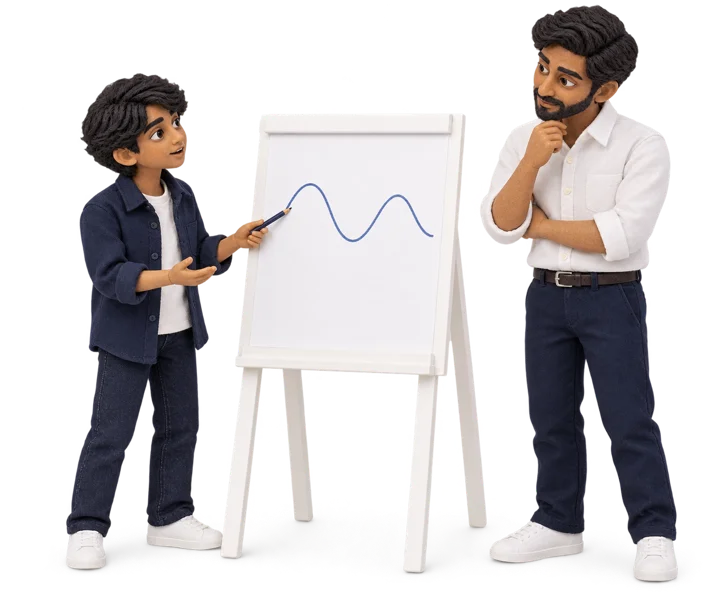
See the diagram
One circuit, two routes
Use AI thoughtfully
Where AI fits
AI can draft both orders. A tutor checks that the facts and course meaning stay the same.
Ask for a little help
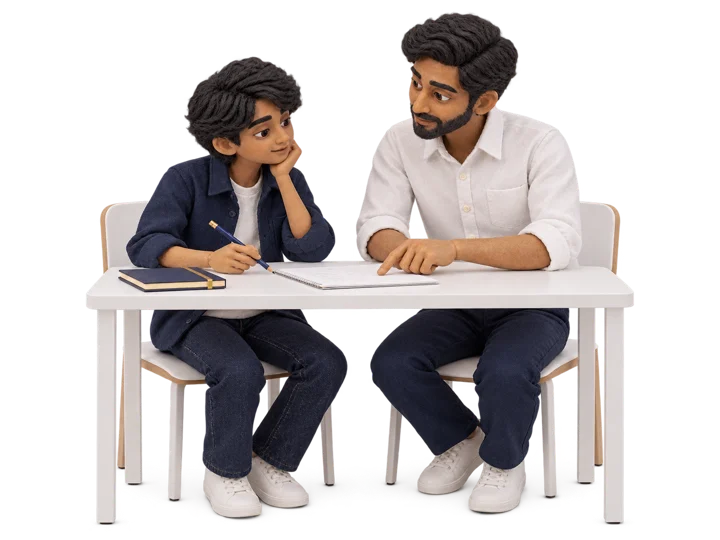
See the diagram
Find the missing connection
Try it today
Try one thing
Teach one small concept in two sequences: example first, then overview; overview first, then example. Ask which made the relationship clearer and why.
Try it independently

See the diagram
Check with a changed example
Check what changed
Offer a similar question with one feature changed. Can the student use the connection in this new case? Keep the helpful sequence available, while leaving room for another approach next time. Preferences can differ across subjects and tasks.
Explore 8 more visual examples Optional. Pick the one you need.
Look at the parts
See the diagram
Example first
Explain it in your own words
See the diagram
Overview first
Ask for a little help
See the diagram
A vocabulary gap
Make the next step clear

See the diagram
Choose a route, not a label
Check against a source

See the diagram
Two AI drafts
Look at the parts
See the diagram
Useful detail
Look at the parts
See the diagram
Move between scales
Explain it in your own words
See the diagram
Ask a better question
What we know, and what we do not
Evidence and limits
The cited study compared processing across tasks and developmental groups. It challenges simple labels. It did not test this circuit lesson or prove that alternating teaching sequences improves school achievement. The example here is a practical suggestion to evaluate with the learner.