
Tuned-inSchool
The learning hub

Understand your learning

AuDHD: when learning needs pull in different directions

The short answer

Autism and ADHD can co-occur. A familiar lesson structure can still contain variety. Ask what helps today instead of explaining every change through a label.

Understand

A steady frame can hold variety

A learner might want to know what happens next and still prefer a different example. Those preferences need not cancel each other out.

A stable sequence with a small choice is one arrangement to explore, not a description of everyone with AuDHD.

Make the next step clear
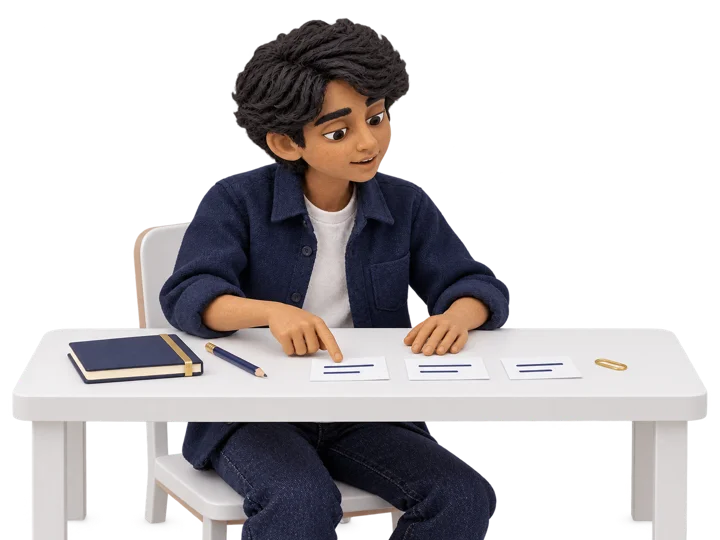
A miniature learner using a short study plan.
Predictability and variety can coexist.
See the diagram

Stable structure, real choice

Stable structure, real choiceA familiar sequence; Two useful options; One learning goalA familiar session1Begin2Practise3ReviewABA familiar sequenceTwo useful optionsOne learning goal

See it in practice

Keep the goal. Change the example.

Use the same beginning, practice and review sequence. For one concept, offer two relevant examples. Let the learner choose.

Ask whether the choice helped them engage with the question and understand it.

Adjust your surroundings

A miniature learner adjusting a study space.
Use a recognisable sequence without making every example identical.
See the diagram

Keep the frame familiar

Keep the frame familiarBegin; Practise; ReviewA familiar session1Begin2Practise3ReviewRecognise the sequenceBeginPractiseReview

Use AI thoughtfully

Where AI fits

AI can propose alternatives inside an agreed lesson structure. A tutor checks their relevance and difficulty.

Ask for a little help

A miniature learner considering a clue.
Offer a manageable choice inside a stable lesson.
See the diagram

Change the example

Change the exampleSame concept; Example A or B; Student choosesA familiar session1Begin2Practise3ReviewABSame conceptExample A or BStudent chooses

Try it today

Try one thing

Keep tomorrow's session sequence familiar, but let the student choose between two examples for one concept. Ask whether the choice made the task more approachable.

Check against a source

A miniature learner checking study material.
Yesterday is useful context, not a complete answer.
See the diagram

Ask about today

Ask about todayWhat feels hard?; What might help?; Try an adjustmentA familiar session1Begin2Practise3ReviewWhat would help today?What feels hard?What might help?Try an adjustment

Check what changed

Look for clearer participation and understanding, not a perfectly still student or a perfectly tidy desk. Ask whether the amount of choice felt useful. Too much flexibility can make the plan harder to follow.

Explore 8 more visual examples Optional. Pick the one you need.

Make the next step clear

A miniature learner using a short study plan.
These are possible preferences, not diagnostic rules.
See the diagram

Two needs, one session

Two needs, one sessionWant a known plan; Want some variety; Design room for both1Want a known plan2Want some variety3Design room for both

Make the next step clear

A miniature learner using a short study plan.
Choice should not create a new planning task.
See the diagram

Keep choice manageable

Keep choice manageableNot every option; Two relevant examples; One clear decisionNot every optionTwo relevant examplesOne clear decision

Ask for a little help

A miniature learner considering a clue.
Respond to what the learner tells you now.
See the diagram

Separate label from need

Separate label from needA diagnostic label; The current obstacle; A practical response1A diagnostic label2The current obstacle3A practical response

Try it independently

A miniature learner working through a task independently.
A more appealing task still needs a learning check.
See the diagram

Review a change

Review a changeTry a choice; Ask about effort; Check understandingTry a choiceAsk about effortCheck understanding

Make the next step clear

A miniature learner using a short study plan.
Flexibility need not mean losing the purpose.
See the diagram

Keep the goal steady

Keep the goal steadySame question; Different route; Explain the same idea1Same question2Different route3Explain the same idea

Make the next step clear

A miniature learner using a short study plan.
A plan is allowed to change when it is not helping.
See the diagram

A lesson can adapt

A lesson can adaptPlanned format; Learner feedback; Adjusted formatPlanned formatLearner feedbackAdjusted format

Explain it in your own words

A miniature learner explaining an idea.
Point out the stable parts when you introduce a change.
See the diagram

Name what stayed the same

Name what stayed the sameSame starting cue; Same learning aim; A different example1Same starting cue2Same learning aim3A different example

Ask for a little help

A miniature learner considering a clue.
Not every change in learning behaviour has the same cause.
See the diagram

Avoid an automatic story

Avoid an automatic storyA different response; More than one explanation; Ask before assumingA different responseMore than one explanationAsk before assuming

What we know, and what we do not

Evidence and limits

The source is expert consensus about co-occurring autism and ADHD. It is not a trial of this lesson format. Predictable structure with limited choice is a suggested teaching arrangement, not a proven treatment or a description of everyone with AuDHD.

Sources