
Make studying easier
Make the next step visible
The short answer
A change of activity deserves a clear plan. Show what is happening now, what comes next and how the learner will know the first task is finished.
- Make the next action concrete.
- Agree on a signal.
- Review the transition together.
Understand
Give the change a visible shape
“Time for the next subject” can leave several questions open. What should stop? Where does the unfinished work go? What starts next?
An agreed sequence can make those decisions easier to see.
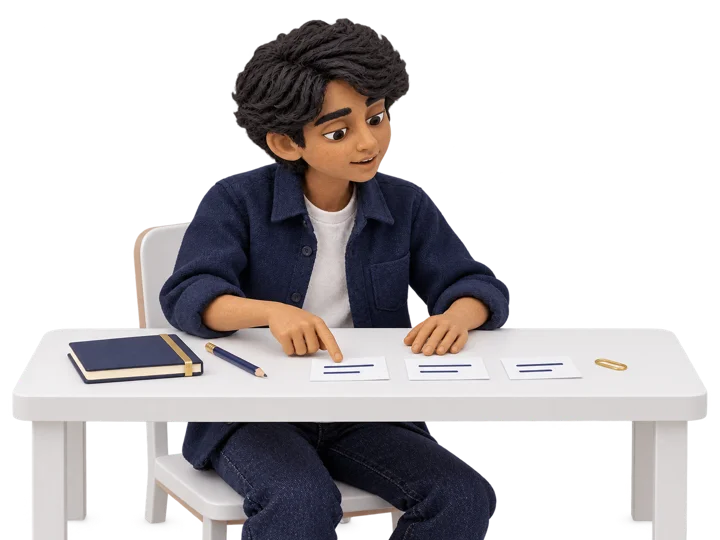
Make the next step clear
See the diagram
Make the change visible
See it in practice
Now. Next. Finished.
Now: read one paragraph. Finished: name two key ideas. Next: open the first mathematics question.
Agree on a cue for the change. If the plan changes, explain the new sequence rather than assuming the learner noticed.
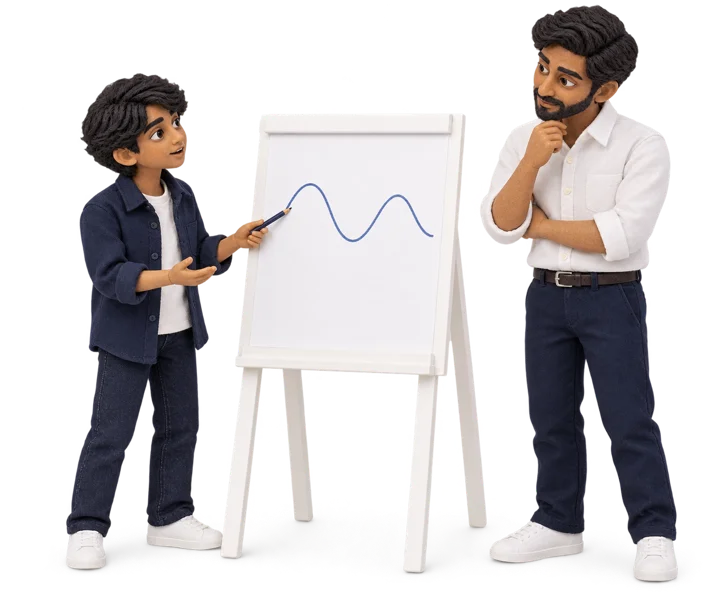
Explain it in your own words
See the diagram
Define the finish point
Use AI thoughtfully
Where AI fits
AI can draft a simple sequence. The tutor and learner decide whether its wording and pace are useful.
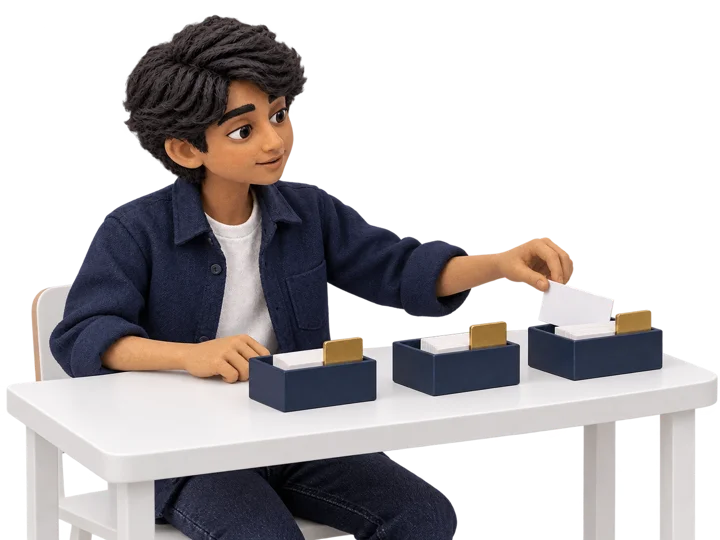
Come back to it
See the diagram
Agree on a signal
Try it today
Try one thing
Before the next change of activity, write “now”, “next” and “finished” with the student. Make the finish point specific and agree how the change will be signalled.
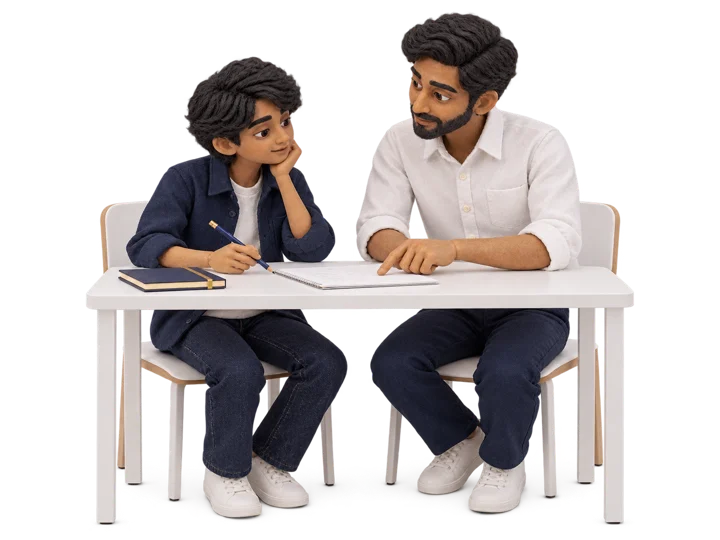
Ask for a little help
See the diagram
Review the transition
Check what changed
Ask whether the learner knew what would happen next and could leave the current task with less uncertainty. Starting sooner is useful only if the next activity is also understood.
Explore 8 more visual examples Optional. Pick the one you need.
Make the next step clear
See the diagram
Before the change
Make the next step clear
See the diagram
A cue is not a surprise
Come back to it
See the diagram
Leave a return marker
Make a small start

See the diagram
Keep instructions concrete
Make room for a break

See the diagram
Too many changes at once
Explain it in your own words
See the diagram
Let the student explain
Explain it in your own words
See the diagram
Change the plan openly
Check against a source

See the diagram
Predictability is not a diagnosis
What we know, and what we do not
Evidence and limits
The guideline supports considering visual communication and predictability. It does not prove this exact three-part routine improves secondary-school learning. The example is a practical application for individual trial, with outcomes checked rather than assumed. A preference for predictability alone does not identify autism.