
Make studying easier
Body doubling: company, structure and the limits of AI
The short answer
Body doubling usually involves another person present while you work. AI can organise a routine, but that does not establish the same effect as human company.
- Separate company from structure.
- Try one bounded session.
- Check learning as well as starting.
Understand
Do not collapse different kinds of support
A willing person, a written plan and an AI assistant are different arrangements. Some learners may find one useful and another distracting.
The helpful question is what changed in this session, not whether a tool deserves a human role.
Work alongside someone
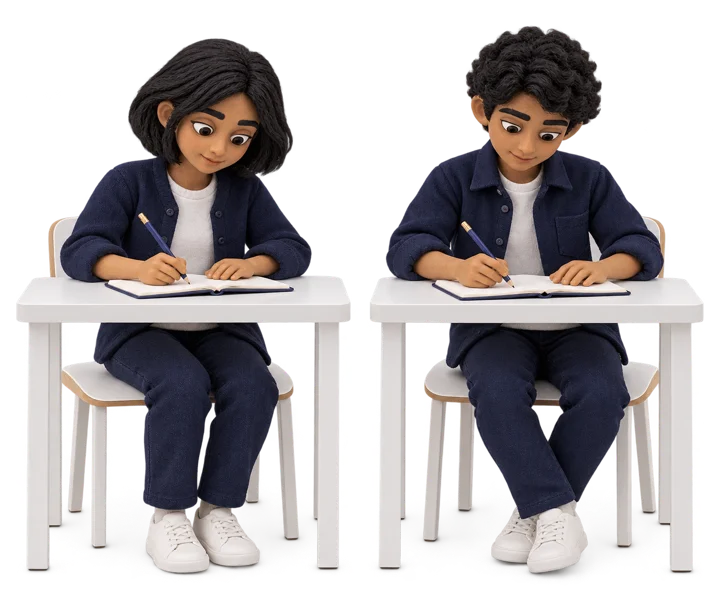
See the diagram
Different kinds of support
See it in practice
Try a small, reversible arrangement
Choose one task and agree on a finish point. Try quiet company with a willing person, or a written plan and timer.
Ask whether starting felt easier and whether useful work happened. Keep a separate check of what the learner understood.
Make the next step clear
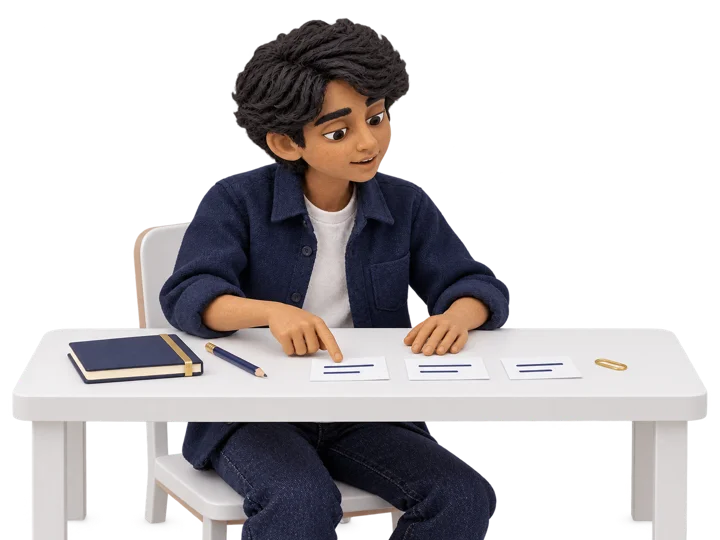
See the diagram
What body doubling means
Use AI thoughtfully
Where AI fits
AI can help define the task and review what you report afterward. Evidence does not establish that it reproduces human body doubling.
Try it independently
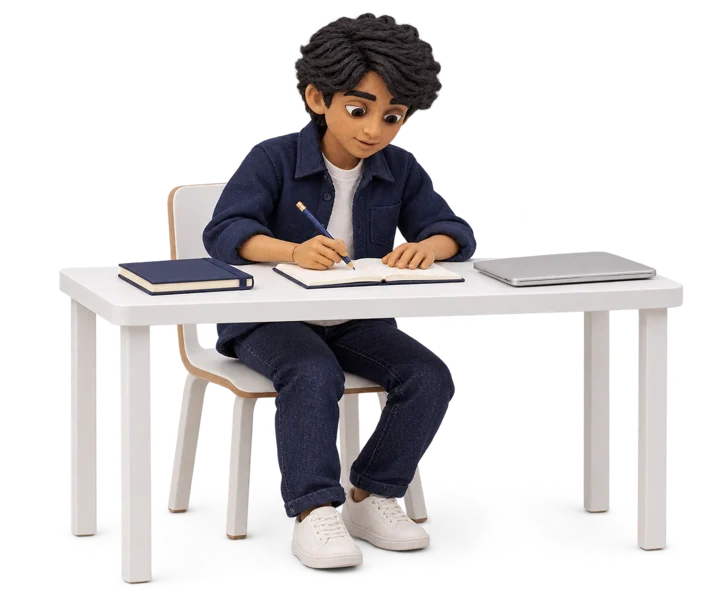
See the diagram
A bounded work session
Try it today
Try one thing
Choose one small task and an agreed finish point. Try a quiet session with a willing person, or use a written plan and timer. If using AI, ask for help defining the task and return afterward to review your work.
Check against a source

See the diagram
Ask what actually helped
Check what changed
Ask whether starting and returning to the task felt easier, whether the company was comfortable and whether the work was understood. Speed alone does not demonstrate learning.
Explore 8 more visual examples Optional. Pick the one you need.
Work alongside someone
See the diagram
Quiet company
Make the next step clear
See the diagram
A routine without AI
Make the next step clear
See the diagram
What AI can organise
Check against a source
See the diagram
Avoid a simulated claim
Try it independently
See the diagram
Keep the academic check
Make room for a break

See the diagram
Make the trial reversible
Work alongside someone
See the diagram
Protect real support
Check against a source
See the diagram
Keep the evidence label
What we know, and what we do not
Evidence and limits
The cited exploratory VR study involved 12 adults aged 18 to 31 doing virtual bricklaying. Its apparently AI partner was operated by a researcher using a Wizard-of-Oz simulation, not an autonomous chatbot. Study preprint
It does not establish benefits for children, school learning or long-term retention, or equivalence between current AI tools and a human body double. Treat AI session structure as something to explore, while keeping human support available.